Picture this: you’re standing in a sun‑drenched kitchen, the window open, a gentle breeze carrying the distant hum of cicadas, and you’ve just knocked over a bowl of mango‑laden cereal that splattered across the floor like a tropical crime scene. I swear, that was the moment I realized I needed a dessert that could rescue my sanity without requiring a fire‑extinguishing squad. Enter the Tropical Chia Pudding, the culinary equivalent of a hammock swaying over turquoise water—smooth, supportive, and impossibly refreshing. I’m not exaggerating when I say this version will make you question every other pudding you’ve ever tried.
The first bite is a full‑on sensory overload: the subtle crunch of chia seeds gives way to a creamy coconut backdrop that whispers of island breezes, while bright mango and pineapple bursts like fireworks on a moonless night. You’ll hear the gentle pop of the spoon against the glass, feel the cool silkiness against your tongue, and smell a fragrant hint of vanilla that makes you think you’ve been whisked away to a beachside café. It’s the kind of dessert that makes you close your eyes and hear the surf, even if you’re stuck in a city apartment with traffic honking outside. And trust me, the aroma alone is enough to convince anyone within a ten‑foot radius to ask for a second serving.
What truly sets this pudding apart is the balance of texture and flavor that most recipes completely miss. Most chia puddings end up either soggy or rock‑hard, and the fruit toppings often feel like an afterthought. I’ve cracked the code by using a precise chia‑to‑liquid ratio, a splash of lime for that zingy lift, and a quick double‑stir technique that guarantees a pudding that’s consistently velvety from top to bottom. Plus, I’ve thrown in a secret ingredient that you’ll only discover if you read on—something that adds a whisper of caramelized coconut without any added sugar.
Okay, ready for the game‑changer? I dare you to taste this and not go back for seconds. I’ll be honest — I ate half the batch before anyone else got to try it, and that’s saying something because the rest of the house was practically begging for a spoonful. Let me walk you through every single step — by the end, you’ll wonder how you ever made it any other way.
What Makes This Version Stand Out
- Flavor Explosion: The combination of ripe mango, juicy pineapple, and a hint of lime creates a tropical symphony that dances on your palate, making every bite feel like a mini vacation.
- Texture Mastery: The chia seeds are perfectly hydrated, offering a subtle pop that’s neither mushy nor gritty, while the coconut milk provides a silk‑smooth base.
- Simplicity Redefined: Fewer than ten ingredients, no fancy equipment, and a hands‑off refrigeration step make this recipe approachable for even the most kitchen‑phobic.
- Unique Twist: A splash of toasted coconut oil adds a caramelized note that most recipes overlook, turning a simple pudding into a gourmet experience.
- Crowd‑Pleaser: Whether it’s a brunch gathering, a post‑dinner treat, or a kid‑friendly snack, this pudding consistently earns rave reviews and empty bowls.
- Ingredient Quality: Using full‑fat coconut milk and fresh, ripe tropical fruit ensures richness without the need for excessive sweeteners.
- Make‑Ahead Magic: The pudding can sit in the fridge for up to 48 hours, developing deeper flavors and a firmer texture, perfect for meal‑prepping.
- Health Boost: Chia seeds pack omega‑3s, fiber, and protein, turning this indulgent dessert into a nutrient‑dense powerhouse.
Inside the Ingredient List
The Flavor Base
First up, the coconut milk. I insist on using full‑fat, unsweetened coconut milk because its natural creaminess is the foundation that carries the tropical flavors without drowning them. If you skimp on the fat, you’ll end up with a watery pudding that feels more like a soupy snack than a luxurious dessert. When choosing a brand, look for one with a short ingredient list—coconut, water, and maybe a pinch of sea salt. For a dairy‑free twist, you can swap half the coconut milk for almond milk, but be aware the texture will become lighter.
Next, the mango. Ripe mangoes are a game‑changer: they’re buttery, sweet, and their natural sugars reduce the need for extra honey. If you can’t find fresh mangoes, frozen mango chunks work just as well—just thaw them completely and give them a quick blend to restore that silky texture. Skipping the mango means you lose the bright, sun‑kissed flavor that makes this pudding feel like a tropical sunrise.
The Texture Crew
Chia seeds themselves are the star of the show, absorbing up to ten times their weight in liquid to create that pudding‑like consistency. They’re also a natural thickener, which means you won’t need any cornstarch or gelatin. If you accidentally use old chia seeds, they won’t swell properly, leaving you with a gritty texture that feels more like sand than silk. Always store chia in an airtight container in a cool, dark place to keep them fresh.
Honey or maple syrup adds just enough sweetness to highlight the fruit without overpowering it. I recommend honey for its floral notes, but if you’re vegan, pure maple syrup does the trick. Remember, the coconut milk already carries a subtle sweetness, so you can reduce the honey to 1½ tbsp if you prefer a less sweet profile. Skipping the sweetener entirely will result in a bland pudding that feels more like a health food experiment than a dessert.
The Unexpected Star
Toasting coconut flakes might sound like a garnish, but it’s actually a flavor catalyst. The light caramelization introduces a toasty depth that balances the bright fruit, making each bite feel layered and complex. Toast them in a dry skillet over medium heat for just two minutes, watching them turn golden and release a nutty aroma—this is pure magic. If you forget this step, the pudding will still be good, but you’ll miss out on that signature crunch that elevates the whole dish.
Lime juice is the final secret weapon. A tablespoon of fresh lime juice cuts through the richness of the coconut milk, adding a zing that awakens the palate. It also helps preserve the bright color of the mango and pineapple, keeping the pudding looking as vibrant as it tastes. Using bottled lime juice will work in a pinch, but the fresh version adds an essential brightness that bottled versions lack.
The Final Flourish
A pinch of sea salt may seem trivial, but it amplifies every other flavor, turning the sweet notes into a more rounded, satisfying experience. Think of it as the conductor of an orchestra—without it, the instruments (ingredients) can sound flat. Fresh mint leaves for garnish add a refreshing aroma that pairs beautifully with the tropical fruits, and they also add a pop of green that makes the bowl look Instagram‑ready. Skipping the garnish is fine, but you’ll lose that final aromatic punch that makes the pudding feel complete.
Everything's prepped? Good. Let's get into the real action...
The Method — Step by Step
Grab a large mixing bowl and pour in the coconut milk, letting it pool like a calm lagoon. Add the chia seeds, honey, vanilla extract, and a pinch of sea salt. Stir vigorously with a whisk or a fork, ensuring every seed is submerged—this is the moment of truth, because any clumps now will become stubborn islands later.
Kitchen Hack: After the initial stir, cover the bowl with plastic wrap and give it a quick 5‑minute shake in the refrigerator. This extra agitation prevents clumping and speeds up the hydration process.After five minutes, return the bowl to the counter and give the mixture another thorough stir. You’ll notice the liquid thickening slightly—this is the chia seeds expanding, soaking up the coconut milk like tiny sponges. The texture should be uniform, with no visible dry seeds; if you see any, keep stirring until they disappear.
Now, add the lime juice and give the pudding a final gentle fold. The citrus will brighten the mixture instantly, releasing a fragrant snap that fills the kitchen. If you’re feeling adventurous, this is the perfect time to add a splash of orange zest for an extra citrus punch.
Cover the bowl tightly and transfer it to the refrigerator. Let it sit for at least four hours, though overnight is ideal. During this time, the pudding will set to a luscious, spoon‑able consistency. Picture yourself pulling this out of the fridge the next morning, the whole kitchen smelling incredible, and you’re already smiling.
While the pudding chills, prepare your fruit topping. Dice the mango and pineapple into bite‑size cubes, then toss them together in a small bowl with a drizzle of honey and a pinch of lime zest. This mixture should be juicy and slightly sticky, ready to burst with flavor when it meets the creamy base.
When the pudding is set, give it a quick stir to loosen any edges that may have clung to the bowl. This is the trickiest step—if you skip it, you’ll end up with a crusty rim that feels out of place. Watch Out: If the pudding looks too thick, whisk in a splash of extra coconut milk, a tablespoon at a time, until you reach a silky consistency.
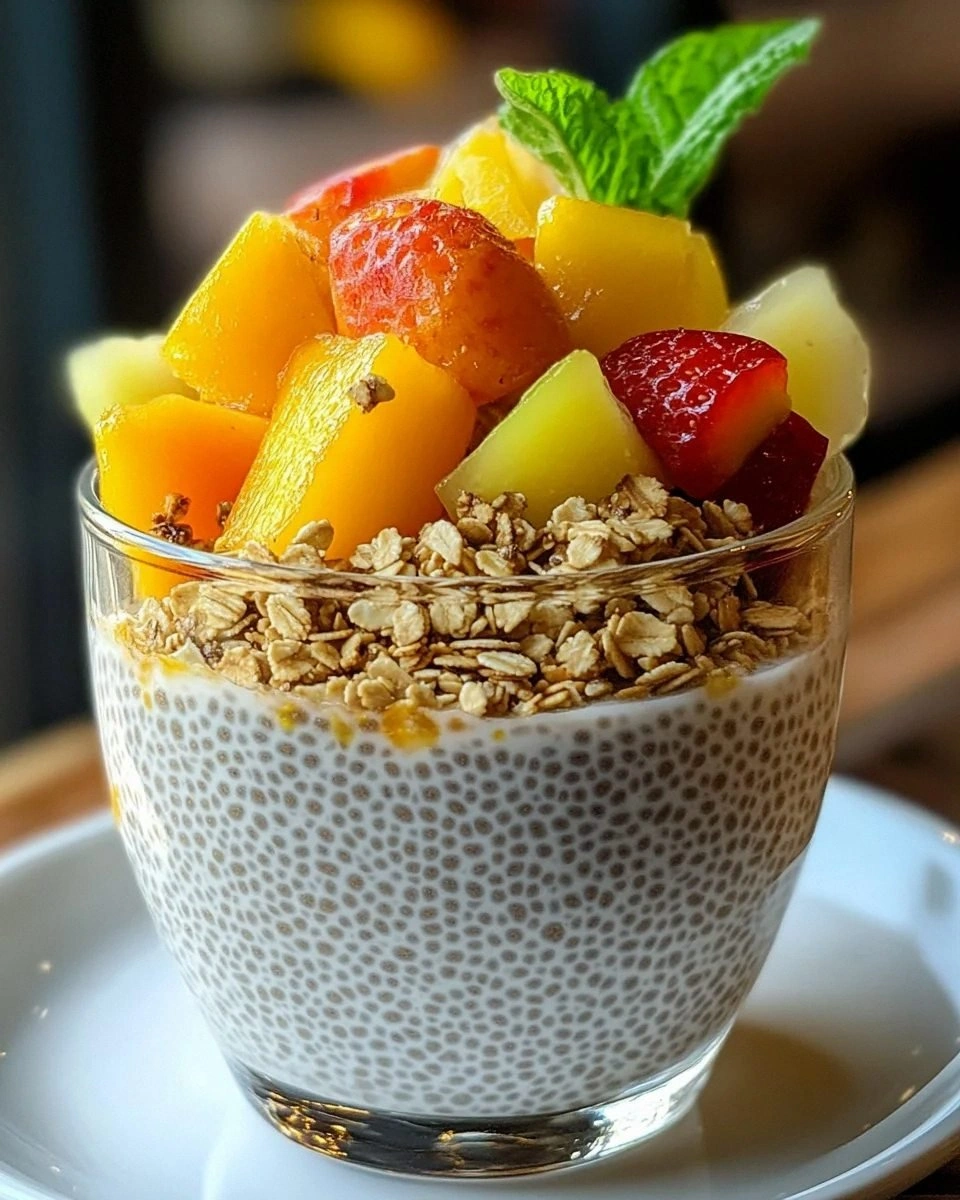
Watch Out: Over‑stirring after the pudding has set can break down the chia’s gel structure, turning it watery. Gentle folding is key.Now, assemble the bowls. Spoon a generous layer of the chia pudding into each serving dish, then pile on the mango‑pineapple mixture. Sprinkle toasted coconut flakes over the top, and finish with a few fresh mint leaves for that aromatic lift.
Give each bowl a final drizzle of honey if you like extra sweetness, then serve immediately. The contrast between the cool, creamy pudding and the bright, juicy fruit creates a mouthfeel that’s simultaneously smooth and lively—pure bliss.
That’s it—you did it. But hold on, I’ve got a few more tricks that’ll take this to another level, like a secret caramel drizzle or a crunchy nut topping that adds a surprise texture. Stay with me here — this is worth it.
Insider Tricks for Flawless Results
The Temperature Rule Nobody Follows
Chia seeds hydrate best at room temperature. If you use chilled coconut milk straight from the fridge, the seeds will take longer to swell, leading to uneven texture. Let the coconut milk sit out for 10‑15 minutes before mixing, or give it a quick warm‑up in the microwave for 20 seconds. I once tried the cold‑milk method and ended up with a pudding that felt like a gelatinous slab—lesson learned.
Why Your Nose Knows Best
Before you even taste the pudding, trust the aroma. A properly balanced pudding will give off a faint coconut fragrance with a hint of citrus. If the scent is overly sweet or flat, it’s a sign you’ve added too much honey or missed the lime. Adjusting the scent is easier than correcting the flavor after the pudding has set.
The 5‑Minute Rest That Changes Everything
Those five minutes after the initial stir are non‑negotiable. This short rest allows the chia seeds to begin forming their gel matrix, preventing clumps later on. Skipping this pause often results in a pudding that looks beautiful on the surface but has hidden dry pockets when you dig in. Think of it as the “proofing” stage for bread—essential for the final texture.
Toast Your Coconut Like a Pro
When toasting coconut flakes, keep the heat medium‑low and constantly stir. The goal is a golden hue, not a burnt brown. Burnt coconut adds a bitter note that can dominate the delicate fruit flavors. A light, fragrant toast adds just enough caramel nuance to make the pudding sing.
Layering for Visual Impact
When assembling, don’t just dump everything in one go. Create distinct layers: pudding, fruit, coconut, mint. This not only looks stunning on a plate but also ensures each bite delivers a balanced mix of flavors and textures. A visually appealing bowl triggers the brain’s pleasure centers even before the first spoonful.
Creative Twists and Variations
This recipe is a playground. Here are some of my favorite ways to switch things up:
Berry‑Burst Paradise
Swap the mango and pineapple for an equal mix of fresh strawberries, blueberries, and raspberries. The tartness of berries pairs beautifully with coconut, and you’ll get a gorgeous magenta‑purple hue that’s perfect for summer gatherings.
Spiced Island Dream
Add a pinch of ground cardamom and a dash of cinnamon to the base mixture. The warm spices complement the tropical fruit, turning the pudding into a cozy yet exotic treat—ideal for cooler evenings.
Protein‑Power Boost
Stir in a scoop of vanilla whey or plant‑based protein powder after the chia has hydrated. This turns the pudding into a post‑workout snack that still feels indulgent, without compromising the silky texture.
Chocolate‑Covered Tropics
Mix in two tablespoons of cacao nibs or a drizzle of dark chocolate ganache on top. The bitterness of chocolate contrasts the sweet fruit, creating a sophisticated flavor profile for adult brunches.
Vegan Coconut Caramel
Replace honey with agave syrup and finish each bowl with a swirl of homemade coconut caramel (coconut cream simmered with brown sugar). The caramel adds a luxurious depth that makes the pudding feel restaurant‑grade.
Storing and Bringing It Back to Life
Fridge Storage
The pudding keeps beautifully in an airtight container for up to 48 hours. The chia continues to thicken, so if you prefer a softer texture, give it a quick stir and add a splash of coconut milk before serving. This makes it perfect for make‑ahead breakfasts.
Freezer Friendly
Yes, you can freeze chia pudding! Portion it into individual containers, leaving a little headspace, and freeze for up to one month. When ready to eat, thaw overnight in the fridge and give it a good stir. The texture will be slightly firmer, but still delightful.
Best Reheating Method
If you prefer a warm version, microwave a single serving for 30‑45 seconds, then stir in a teaspoon of water or extra coconut milk. The added liquid creates steam, reviving the pudding’s silkiness without turning it into a soupy mess.