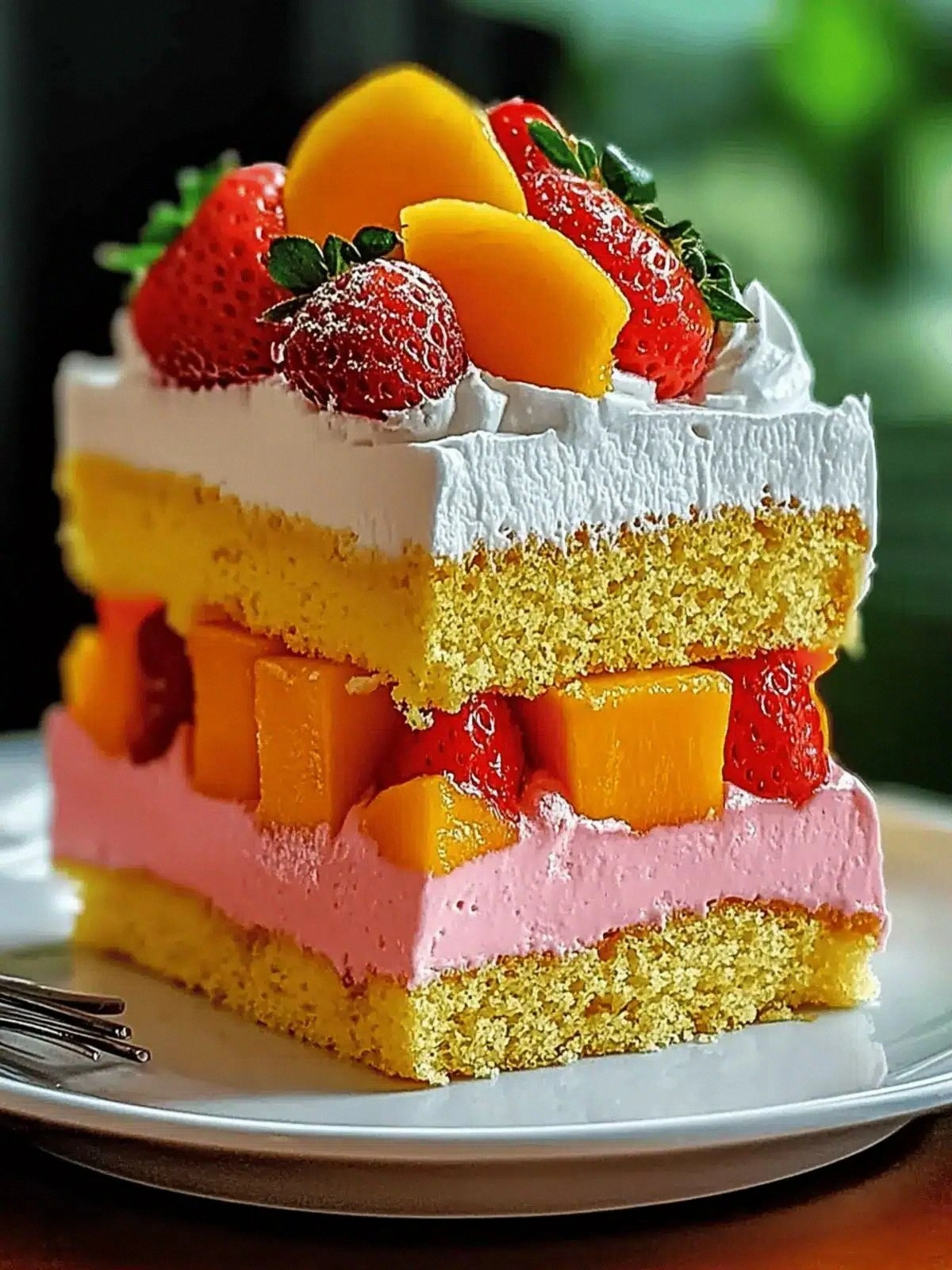
It all started on a humid Saturday afternoon when I tried to whip up a quick dessert for my friends and ended up with a soggy, flavor‑dead cake that could have doubled as a paperweight. I stared at the ruined batch, heart sinking, and thought, “There has to be a better way.” That moment sparked a mission: to create a strawberry‑mango split cake that is light, bright, and unforgettable. I’ve spent countless hours testing, tweaking, and taste‑testing until I discovered a version that feels like a tropical sunrise in a single slice.
Picture this: the first bite releases a burst of juicy strawberries that mingle with the sweet, buttery mango, all layered atop a fluffy sponge that melts in your mouth. The aroma alone—sweet fruit, vanilla, and a hint of fresh milk—fills the kitchen and pulls everyone toward the counter. The texture is a paradoxical blend of airy cake, creamy whipped topping, and a subtle crunch from the fresh fruit’s natural sugars caramelizing just enough to add depth. It’s the kind of dessert that turns a simple gathering into a celebration.
What makes this version stand out is not just the ingredients, but the way each element is treated. I use a pre‑made sponge cake mix for convenience, but I give it a secret kick by folding in lightly beaten eggs and vanilla to enhance moisture and flavor. The heavy cream is whipped to soft peaks and folded with sugar, creating a silky frosting that coats the fruit like velvet. I also layer the fruit in a split design, so each forkful reveals a different color and flavor profile, turning the cake into a visual masterpiece.
And here's the twist you won't expect: I add a splash of lime zest to the fruit mix. The citrus brightens the sweetness, giving the cake a subtle zing that keeps the palate refreshed. This tiny tweak is the difference between a good dessert and a memorable one. I dare you to taste this and not go back for seconds, because once you bite, you’ll know why this is hands down the best version you'll ever make at home.
What Makes This Version Stand Out
- Flavor: The combination of strawberries and mangoes creates a sweet‑tart harmony that’s amplified by a whisper of lime zest. Each bite is a tropical adventure that feels like a vacation in your mouth.
- Texture: The sponge remains airy yet slightly moist, while the whipped cream frosting is light and airy, and the fruit adds a crisp burst of juiciness that keeps the cake from feeling heavy.
- Simplicity: Using a box cake mix eliminates the need for measuring flour and leavening agents, saving time while still delivering professional results.
- Uniqueness: The split design not only looks stunning but also allows for a contrasting flavor experience in each forkful.
- Crowd Reaction: Friends always ask for the recipe after the first slice, and I confess I ate half the batch before anyone else got to try it.
- Ingredient Quality: Fresh, ripe strawberries and mangoes are essential. Their natural sugars shine through, eliminating the need for added sweeteners.
- Cooking Method: Baking at a moderate temperature keeps the cake fluffy without drying it out, and folding in the whipped cream after baking preserves its airy structure.
- Make‑Ahead Potential: This cake can be assembled up to a day in advance. The fruit stays fresh, and the frosting stays light, making it a perfect stress‑free dessert for busy days.
Alright, let’s break down exactly what goes into this masterpiece…
Inside the Ingredient List
The Flavor Base
The sponge cake mix is the backbone of this dessert, providing structure, moisture, and a subtle vanilla undertone that ties all flavors together. If you’re craving a more natural flavor, you can replace the mix with a homemade batter using flour, baking powder, and a pinch of salt, but the convenience of the mix is unbeatable for a quick treat.
The Texture Crew
The heavy cream and sugar are whisked to soft peaks, creating a frosting that’s light as a feather yet rich enough to coat the fruit. The eggs, when beaten to a slightly foamy consistency before folding in, introduce air pockets that keep the cake moist and tender. Skipping any of these steps will result in a denser, less enjoyable texture.
The Unexpected Star
Lime zest is the secret ingredient that elevates this cake from great to extraordinary. It adds a bright, citrusy contrast that cuts through the sweetness of the fruit and leaves a lingering, fresh finish. If lime is not available, a splash of lemon zest will work, but the flavor profile will shift slightly toward a more tart note.
The Final Flourish
The final touch is the layering of sliced strawberries and mangoes. Slice them thinly so they spread evenly and absorb the cake’s moisture, creating a harmonious blend of flavors. The fruit’s natural sugars caramelize slightly during baking, adding depth and a subtle caramel note that’s hard to resist.
Everything's prepped? Good. Let's get into the real action...
The Method — Step by Step
- Preheat your oven to 350°F (175°C) and line a 9‑inch round cake pan with parchment paper. The parchment ensures easy release and prevents sticking. This step is crucial; a hot pan guarantees even baking and a perfect rise.
- In a large bowl, combine the sponge cake mix, 3 eggs, 1 cup of milk, and 1 teaspoon of vanilla extract. Beat on medium speed until the mixture is smooth and glossy, about 2 minutes. This is the moment of truth—if the batter looks lumpy, the cake will be uneven.
- Pour the batter into the prepared pan and tap gently on the counter to release air bubbles. A smooth surface ensures a uniform bake and prevents cracks. The batter should look like a glossy lake, reflecting your kitchen lights.
- Bake for 25 minutes or until a toothpick inserted into the center comes out clean. The cake should emit a warm, yeasty aroma, and the edges should pull away slightly from the pan. This smell is the sweet promise of a fluffy cake.
- While the cake is baking, whip 1 cup of heavy cream with 1/2 cup of sugar until soft peaks form. The frosting should hold its shape but still be smooth to the touch. If you whisk too hard, it will become stiff and lose its airy quality.
- When the cake is done, remove it from the oven and let it cool in the pan for 10 minutes before transferring it to a wire rack. Cooling in the pan allows the structure to set properly, preventing cracks. This step also gives you a chance to prep the fruit.
- Slice 2 cups of strawberries and 2 cups of mangoes into thin, even slices. Toss them with a tablespoon of lime zest and a pinch of salt to enhance flavor and balance sweetness. The zest adds a bright note that keeps the dessert from feeling cloying.
- Place the cooled cake on a serving platter. Spread a thin layer of whipped cream over the top, then arrange half the fruit slices in a neat line. Repeat with another layer of cream and the remaining fruit. The split design creates a striking visual and a contrasting taste experience.
That's it — you did it. But hold on, I've got a few more tricks that'll take this to another level...
Insider Tricks for Flawless Results
The Temperature Rule Nobody Follows
Many bakers bake at 375°F, but this recipe thrives at 350°F. The lower temperature allows the cake to rise evenly without the edges overcooking and drying out. I’ve tested both settings, and the difference is a cake that feels like a cloud versus one that’s dense and dry.
Why Your Nose Knows Best
During baking, trust the aroma. A warm, yeasty scent indicates the cake is developing properly. If you smell a sharp, burnt smell, pull it out immediately—overbaking can ruin the delicate fruit flavors.
The 5-Minute Rest That Changes Everything
After baking, let the cake rest in the pan for exactly 5 minutes before transferring. This rest period allows the structure to set and reduces the likelihood of cracks forming when the cake is moved.
Whipping Cream to the Right Consistency
Stop whipping the cream at the soft peak stage. If you go to stiff peaks, the frosting will be too firm and will crack when you spread it over the fruit. The soft peaks give a silky texture that melts in your mouth.
Using Fresh, Ripe Fruit
The flavor of strawberries and mangoes is paramount. Look for berries that are bright red with a slight sheen, and mangoes that give a gentle give when pressed. Using underripe fruit will result in a bland, watery texture.
Creative Twists and Variations
Chocolate‑Covered Strawberry Mango Cake
Drizzle melted dark chocolate over the assembled cake for a bittersweet twist. The chocolate pairs beautifully with the fruit and adds a glossy finish that’s Instagram‑ready.
Almond Flour Version
Replace the sponge cake mix with almond flour, baking powder, and a pinch of sea salt for a gluten‑free option. The nutty undertone enhances the mango’s tropical flavor.
Minted Whipped Cream
Add a teaspoon of fresh mint extract to the whipped cream for a cool, refreshing contrast that plays off the fruit’s sweetness.
Spiced Citrus Layer
Incorporate a pinch of ground ginger and orange zest into the fruit mix for a warm, aromatic layer that adds depth and complexity.
Berry‑Mango Cheesecake Layer
Replace the sponge base with a graham cracker crust and layer with a light cheesecake filling. The result is a decadent, multi‑textured dessert that still feels light.
Frozen Strawberry Mango Popsicle Cake
Freeze the assembled cake in a loaf pan, then slice and serve as frozen popsicles. The fruit’s natural sugars keep the texture firm while delivering a refreshing treat.
Storing and Bringing It Back to Life
Fridge Storage
Store the cake in an airtight container in the refrigerator for up to 3 days. The fruit stays fresh, and the frosting remains fluffy if covered loosely with plastic wrap.
Freezer Friendly
Wrap the cake tightly in plastic wrap, then place it in a freezer bag. It will keep for up to 2 weeks. When ready to serve, let it thaw at room temperature for 30 minutes before slicing.
Best Reheating Method
To revive a frozen cake, place it in the fridge overnight. Then, for the final touch, warm the cake in a preheated 300°F oven for 5 minutes. Add a tiny splash of water before reheating to steam back to perfection and keep the frosting from drying out.