Picture this: you’re standing in a cramped apartment kitchen, the clock ticking, and the craving for something that feels like a five‑star restaurant experience is gnawing at you. I was in that exact spot last night, flipping through a recipe book that promised “Salmon en Croûte” and ending up with a soggy, under‑seasoned mess that tasted like a sad attempt at sophistication. That disaster became the spark that lit my culinary curiosity. I set out to create a version that would not only rescue the humble salmon but elevate it to a showstopper, all while keeping the process straightforward enough for anyone who has ever felt intimidated by puff pastry.
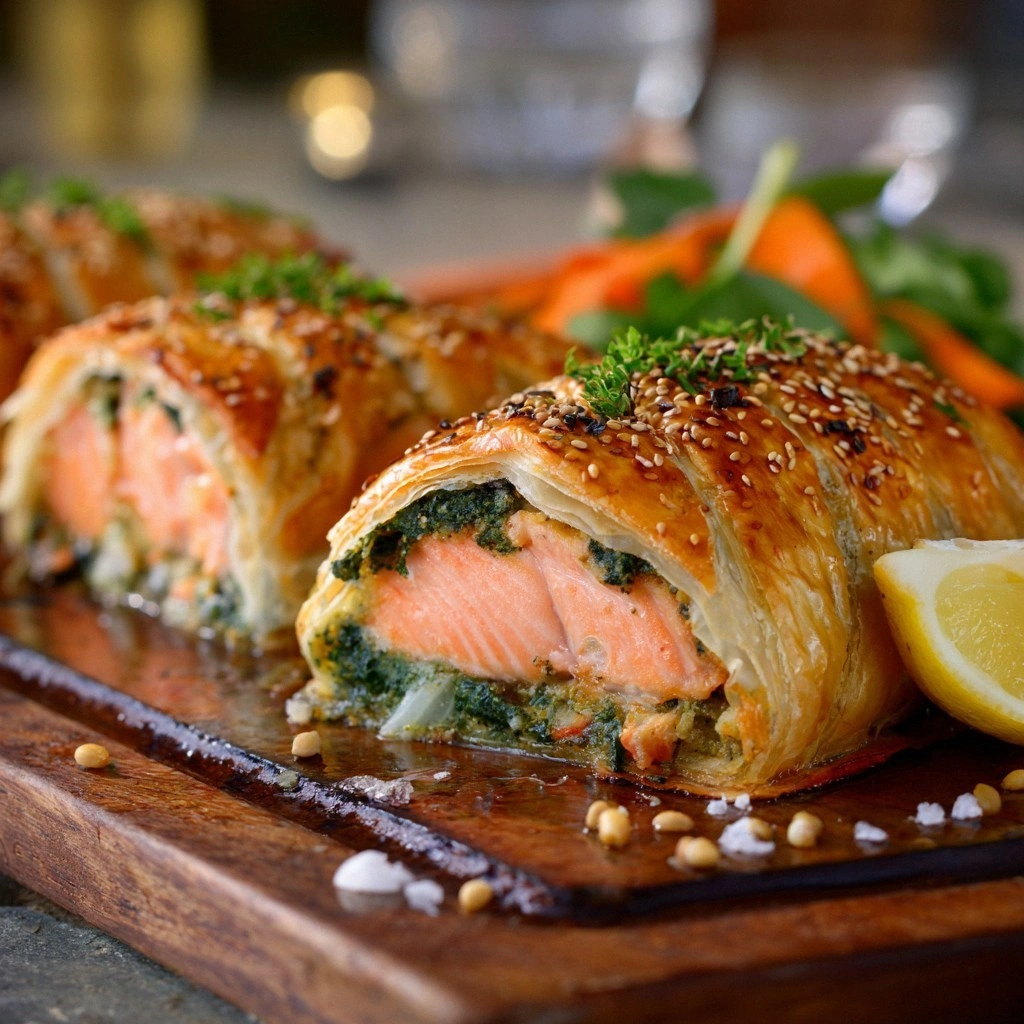
The moment you open the oven, a buttery aroma envelopes the kitchen, and the anticipation builds like a drumroll before a big concert. The salmon fillets glisten under the gentle glow of the oven light, their flesh shimmering with a hint of pink. The puff pastry, folded into a crisp shell, crackles softly as it bakes, releasing a nutty scent that makes your mouth water. When you finally slice through the golden crust, a steam cloud rises, carrying with it the savory fragrance of dill, garlic, and lemon. You’re not just eating; you’re experiencing a symphony of textures—crisp on the outside, tender on the inside, with a creamy spinach‑cream cheese filling that melts in your mouth.
What sets this version apart isn’t just the use of puff pastry; it’s the meticulous layering of flavors and the precision of technique. I’ve distilled the recipe into a series of micro‑challenges—“I dare you to taste this and not go back for seconds”—and each challenge is designed to test your senses and skill. The result is hands down the best version of salmon en croûte you’ll ever make at home, a dish that will make your friends ask, “Where did you learn to do that?” The secret? A blend of classic ingredients with a few unexpected twists that will keep your palate on its toes.
If you’ve ever struggled with flaky pastry or under‑cooked salmon, you’re not alone, and I’ve got the fix. Picture yourself pulling this out of the oven, the whole kitchen smelling incredible, and knowing you’ve nailed a dish that’s as impressive as it is delicious. Let me walk you through every single step—by the end, you’ll wonder how you ever made it any other way.
What Makes This Version Stand Out
- Flavor: The combination of Dijon mustard, lemon zest, and fresh dill creates a bright, tangy profile that cuts through the richness of the salmon.
- Texture: The puff pastry turns to a flaky, buttery shell that crisps to a golden perfection, while the spinach‑cream cheese filling stays moist and silky.
- Ease: Every step is designed to be intuitive, even for novice cooks—no need for fancy kitchen gadgets or advanced pastry skills.
- Visual Appeal: The glossy finish from the egg wash and the contrasting colors of green spinach and golden pastry make this dish Instagram‑ready.
- Crowd‑Pleaser: Whether it’s a weeknight dinner or a dinner party, guests will be impressed and ask for seconds.
- Ingredient Quality: Using high‑quality salmon and fresh herbs elevates the dish, ensuring each bite is flavorful.
- Make‑Ahead Friendly: The assembled pastries can be refrigerated or frozen and baked later, making it a great option for busy schedules.
- Health‑Balanced: Packed with omega‑3 fatty acids from salmon and a good dose of greens, this dish feels indulgent yet nutritious.
Inside the Ingredient List
The Flavor Base
The Dijon mustard and lemon zest are the backbone of this dish, providing a sharp, bright contrast to the rich salmon. The mustard’s subtle heat cuts through the buttery pastry, while the citrus zest adds a fresh, almost floral note that lifts the overall flavor profile. If you skip this combination, the dish will feel flat and overly heavy. For a milder version, reduce the mustard to one tablespoon and add a splash of white wine to the lemon zest.
The Texture Crew
Puff pastry is the star of the show, delivering that coveted flaky, buttery crunch. The spinach and cream cheese filling bring moisture and a silky texture that contrasts beautifully with the pastry’s crispness. If you’re concerned about the spinach wilting too much, blanch it briefly before mixing, then squeeze out excess water. Swapping the spinach for arugula adds a peppery bite, while a handful of sun‑dried tomatoes would give a sweet, umami punch.
The Unexpected Star
Fresh dill is the unexpected hero that ties all the flavors together. Its piney, slightly sweet aroma complements the salmon’s natural richness and balances the acidity from the lemon. If dill is out of season or you’re allergic, substitute with fresh parsley or chives for a milder herbaceous note. A pinch of smoked paprika can also add a subtle smokiness that works wonderfully with the salmon.
The Final Flourish
The egg wash gives the pastry a glossy, golden finish that’s irresistible to the eye. Olive oil adds a subtle depth of flavor and helps the pastry bake to a crisp texture. Butter, used sparingly, can enhance the richness of the crust and prevent it from drying out. Don’t forget the final sprinkle of chopped parsley—this adds a pop of color and a fresh, herbal finish that brightens the dish.
Everything’s prepped? Good. Let’s get into the real action.
The Method — Step by Step
- Prep the salmon: Pat the salmon fillets dry with paper towels. Lightly season with salt, pepper, and a drizzle of olive oil. Lay the fillets on a clean cutting board, then spread a thin layer of Dijon mustard over the top of each fillet. This not only adds flavor but also helps the mustard adhere to the pastry. Let the fillets rest while you prepare the filling.
- Make the filling: In a bowl, combine the softened cream cheese, chopped spinach, minced garlic, lemon zest, lemon juice, and fresh dill. Mix until you get a smooth, cohesive mixture. If the filling feels too thick, add a splash of milk or a teaspoon of olive oil to loosen it up. Taste and adjust seasoning—more dill for a herbal kick, or a touch of sugar if you like a hint of sweetness.
- Assemble the pastry: Unroll the puff pastry sheet on a lightly floured surface. Place a salmon fillet in the center and spoon a generous amount of the filling on top. Fold the pastry over the fillet, sealing the edges by crimping them with a fork or your fingertips. For a decorative touch, cut slits in the top of the pastry to allow steam to escape and create a beautiful pattern.
- Apply the egg wash: In a small bowl, whisk the egg with a tablespoon of water. Brush the pastry surface with the egg wash, ensuring an even coat. This step gives the pastry a shiny, golden finish that’s simply irresistible. If you’re using a pastry brush, a gentle, circular motion ensures the egg wash spreads evenly without soaking the pastry.
- Preheat the oven: Set your oven to 425°F (220°C). A high temperature is crucial for puff pastry—it needs that quick, explosive rise. Place a baking sheet on the middle rack, and if you have a pizza stone, preheat it as well to help the bottom of the pastry crisp up.
- Bake: Slide the assembled pastries onto the preheated baking sheet or stone. Bake for 18–22 minutes, or until the pastry is golden brown and the salmon reaches an internal temperature of 145°F (63°C). The pastry should smell toasty, and the edges will start pulling away from the salmon, indicating that it’s done.
- Let it rest: Once baked, transfer the pastries to a wire rack and let them rest for 5 minutes. This brief rest allows the juices to redistribute, preventing the pastry from becoming soggy. It also gives the filling a moment to set, making the first bite a perfect bite.
- Serve: Garnish with a sprinkle of chopped parsley for a pop of color. Slice each pastry into portions and serve immediately, perhaps with a side of roasted asparagus or a light salad. The contrast between the warm, flaky pastry and the cool, fresh greens is a match made in culinary heaven.
- Enjoy: Take a moment to savor the first bite—crisp pastry, tender salmon, creamy filling, and a burst of herbaceous freshness. This is the moment of truth, the culmination of your hard work and culinary curiosity. I dare you to taste this and not go back for seconds.
That's it — you did it. But hold on, I've got a few more tricks that'll take this to another level.
Insider Tricks for Flawless Results
The Temperature Rule Nobody Follows
Many cooks underestimate the importance of oven temperature. Baking at 425°F (220°C) ensures the puff pastry rises quickly and seals, preventing steam from making it soggy. If your oven runs hot, reduce the temperature by 25°F and bake a couple of minutes longer. I once baked at 450°F and the pastries puffed too high, collapsing on the inside. Keep a thermometer handy for the most accurate results.
Why Your Nose Knows Best
The aroma of the baking pastry is a reliable indicator of doneness. When the pastry smells nutty and slightly caramelized, it’s ready. If it still has a raw dough smell, give it a few more minutes. Trusting your nose saves you from overbaking or underbaking and ensures the salmon stays moist.
The 5-Minute Rest That Changes Everything
Resting the pastries after baking isn’t just a formality—it allows the juices to redistribute and the pastry to firm up. Skipping this step often leads to a soggy center. I’ve learned that a 5‑minute rest on a wire rack is the sweet spot; too short, and the pastry remains soft; too long, and it hardens.
Seal the Edges Like a Pro
A tight seal prevents the filling from leaking out during baking. Use a fork to crimp the edges firmly, or press them together with your fingers. If you’re worried about a messy crimp, lightly dampen the pastry edges with water before sealing; this helps the pastry adhere and gives a smoother finish.
Use Fresh Salmon for Maximum Flavor
The quality of salmon directly influences the dish’s overall taste. Look for fillets that are firm, with a bright pink hue and a mild sea scent. Avoid salmon that smells overly fishy or has a dull color. If you’re on a budget, frozen salmon can work, but thaw it slowly in the fridge and pat dry before seasoning.
Creative Twists and Variations
Mediterranean Medley
Swap the spinach for a mixture of chopped sun‑dried tomatoes and olives, and add a splash of feta cheese. The salty feta and sweet tomatoes create a Mediterranean vibe that pairs beautifully with the buttery pastry. This variation is perfect for a summer dinner when you want something light yet indulgent.
Smoky Chipotle Surprise
Add a teaspoon of chipotle in adobo sauce to the filling for a smoky heat. Replace the fresh dill with smoked paprika and a pinch of cumin for extra depth. The smoky chipotle complements the salmon’s natural flavor while giving the dish a bold, adventurous twist.
Herb‑Infused Delight
Use a blend of fresh herbs—parsley, tarragon, and chives—in place of dill. The combination adds a layered herbaceous profile that elevates the dish’s freshness. This version is especially delightful when paired with a crisp green salad.
Creamy Avocado Twist
Mince half an avocado into the cream cheese filling for a creamy, buttery texture that pairs well with the salmon. The avocado adds healthy fats and a subtle nutty flavor, making the dish richer and more decadent. A squeeze of lime juice brightens the avocado’s flavor, keeping the dish balanced.
Cheesy Baked Brisket
Replace the salmon with thinly sliced brisket and use a mixture of cheddar and mozzarella instead of cream cheese. The beef’s savory depth combined with the melty cheese creates a hearty, comforting version that’s great for a family dinner.
Vegan Version
Use a plant‑based salmon substitute or tofu, and replace the cream cheese with a cashew‑based cream. Keep the puff pastry vegan by ensuring it’s made with plant‑based butter. This version is a crowd‑pleaser for those who want a plant‑based take on the classic dish.
Storing and Bringing It Back to Life
Fridge Storage
Store leftover pastries in an airtight container in the refrigerator for up to 2 days. The pastry may lose a bit of crispness, but it will still taste delicious. To reheat, place the pastries on a baking sheet and warm them in a 350°F (175°C) oven for 5–7 minutes until heated through.
Freezer Friendly
Wrap each pastry tightly in plastic wrap and place them in a freezer bag. They can be frozen for up to 2 months. When ready to eat, let them thaw in the refrigerator overnight, then bake at 425°F (220°C) for 12–15 minutes until crispy.
Best Reheating Method
The secret to reviving the pastry’s crispness is to use an oven, not a microwave. If you’re in a hurry, a toaster oven works well too. Add a tiny splash of water to the bottom of the baking sheet to create steam, which keeps the pastry from drying out while it reheats.