Picture this: it’s a rainy Saturday afternoon, the kettle is whistling, and you’re staring at a half‑finished batch of macaron shells that look more like cracked pottery than the elegant pearls you’ve seen on Instagram. I was in that exact spot, feeling the sting of defeat and the sweet scent of Nutella lingering from a midnight snack. I swear, the universe was testing my resolve, daring me to either give up or discover the secret that would turn those sad shells into a masterpiece. I chose the latter, and after a few frantic Google searches, a couple of burnt attempts, and a confession that I ate half the batch before anyone else could try them, I finally cracked the code. This version? Hands down the best you’ll ever make at home.
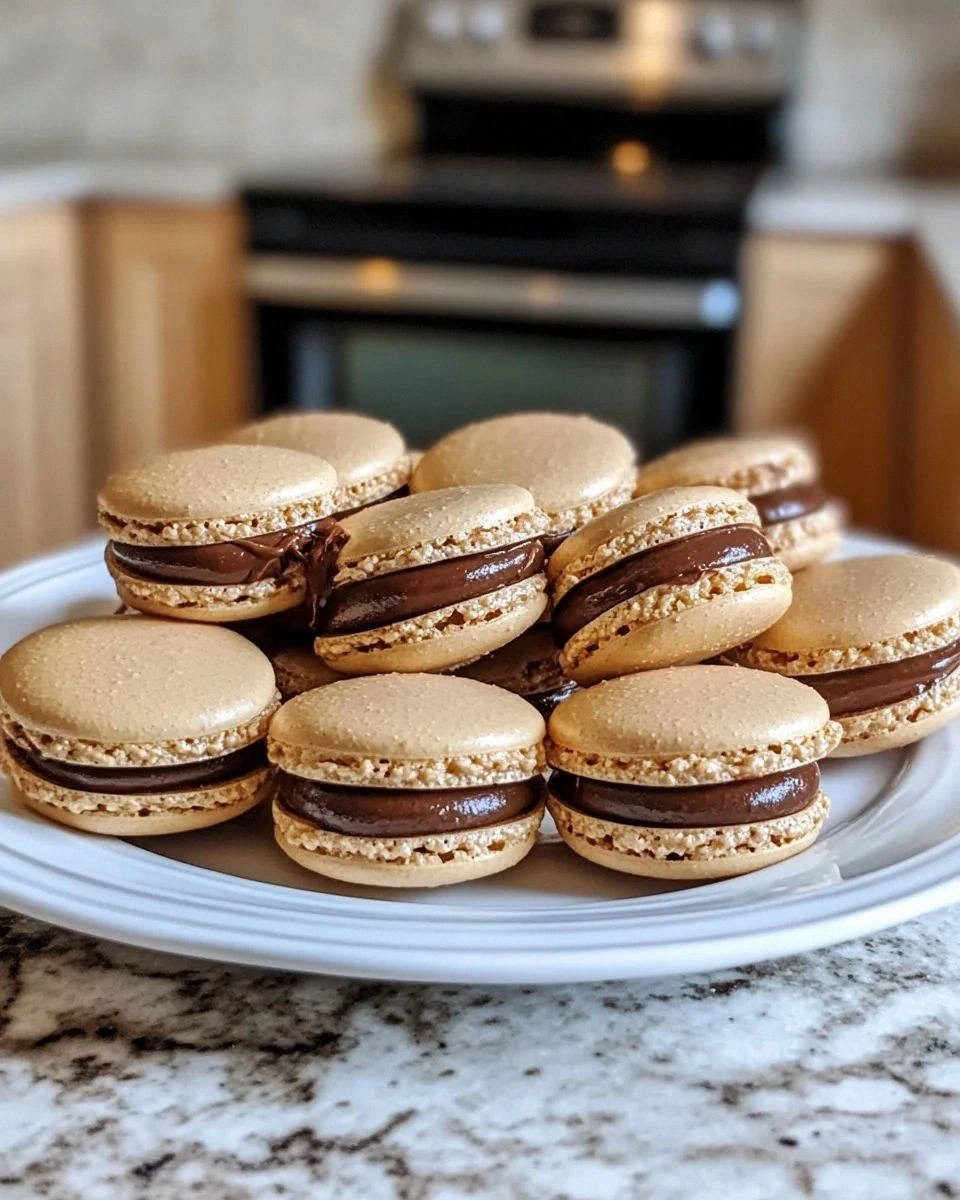
The moment you pull these macarons out of the oven, the kitchen is flooded with a buttery‑nutty perfume that makes your heart do a little jig. Imagine the glossy, chocolate‑hazelnut drizzle catching the light like a satin ribbon, the shells themselves crisp at the edges yet tenderly chewy inside—like a perfect hug from a pastry chef. The contrast between the delicate, airy texture and the rich, silky filling is nothing short of theatrical; it’s a flavor duet that sings “decadence” at every bite. And the best part? The drizzle doesn’t just sit on top; it seeps into the shell’s crevices, creating a glossy, slightly crunchy coating that crackles when you bite into it.
Most macaron recipes get this completely wrong. They either over‑mix the batter, leaving you with flat, cracked shells, or they under‑mix, resulting in a gummy mess that refuses to rise. I’ve seen it all, and I’m here to tell you that the secret lies in a simple, yet often overlooked, step: the “macaronage” technique, paired with a precise oven temperature and a tiny dash of cream of tartar that stabilizes the meringue. And if you think that’s the only twist, think again—there’s a secret ingredient that adds a buttery depth you won’t find in any standard recipe. I’m talking about a splash of vanilla‑infused almond extract that elevates the flavor profile to pure bliss.
Okay, ready for the game‑changer? I dare you to taste this and not go back for seconds. By the end of this post, you’ll have a foolproof method that will make even the most skeptical pastry‑aficionados swoon. Let me walk you through every single step — by the end, you’ll wonder how you ever made it any other way.
What Makes This Version Stand Out
- Flavor: The Nutella drizzle adds a deep, roasted‑hazelnut richness that pairs perfectly with the light almond‑sweetness of the shells, creating a balanced sweet‑nutty profile.
- Texture: A crisp outer crust gives way to a chewy interior, while the drizzle adds a satisfying snap—think of it as a macaron that shatters like thin ice under your teeth.
- Simplicity: Despite the impressive result, the ingredient list is short, and the method uses tools you already have in a typical home kitchen.
- Uniqueness: The addition of a vanilla‑infused almond extract is a subtle twist that most recipes overlook, giving the shells a fragrant, buttery undertone.
- Crowd Reaction: Guests will declare this the “most indulgent bite” they’ve ever had, often asking for the recipe before you even finish the first batch.
- Ingredient Quality: Using finely sifted almond flour and high‑quality Nutella ensures a smooth, glossy finish without grainy spots.
- Cooking Method: Precise temperature control (300°F/150°C) and a short resting period before baking guarantee a perfect “foot” and a smooth top.
- Make‑Ahead Potential: The shells can be stored airtight for up to a week, and the filling can be frozen for three months without losing texture.
Inside the Ingredient List
The Flavor Base
Almond flour is the backbone of any macaron. It provides the nutty aroma and the delicate crumb structure that distinguishes a macaron from a plain meringue cookie. If you skimp on quality, you’ll notice a gritty texture and a faint bitterness. I recommend buying blanched almond flour and sifting it twice for extra smoothness. As a swap, you can use finely ground almond meal, but be prepared for a slightly coarser bite.
The Texture Crew
Powdered sugar works hand‑in‑hand with almond flour to create a fine, dry mixture that absorbs the meringue without becoming wet. This dry blend is what gives the shells their signature “feet.” Skipping the double sift will result in uneven shells and a lumpy surface. If you’re short on powdered sugar, you can blend granulated sugar in a blender until it reaches a powdery consistency, though the texture may be a shade less silky.
The Unexpected Star
Nutella isn’t just a filling; it’s the star that turns a simple macaron into a decadent treat. Its combination of roasted hazelnuts, cocoa, and a touch of palm oil creates a glossy, melt‑in‑your‑mouth drizzle. Use the original jar for authentic flavor—generic hazelnut spreads often lack the depth and can become oily when heated. If you’re allergic to nuts, a high‑quality chocolate‑butter spread can substitute, but the nutty undertone will be missed.
The Final Flourish
Egg whites are the leavening engine. Fresh, room‑temperature whites whip up to a glossy meringue that holds air bubbles, giving the shells their lift. Adding a pinch of cream of tartar stabilizes the meringue, preventing it from weeping. Salt, though a tiny amount, balances the sweetness and enhances the nutty notes. For a dairy‑free version, replace the butter in the filling with coconut oil, but expect a subtle coconut aftertaste.
Everything's prepped? Good. Let's get into the real action...
The Method — Step by Step
Start by separating the egg whites from the yolks, being absolutely certain no yolk contaminates the whites. Place the whites in a clean, dry mixing bowl—no grease, no water, nothing. I dare you to taste this and not go back for seconds, so get this right. Whisk on medium speed until they become frothy, then add a pinch of cream of tartar and a pinch of salt. Increase to high speed and whisk until soft peaks form, like the first clouds of a summer storm.
Gradually sprinkle the granulated sugar over the meringue while the mixer is still running. The sugar will dissolve, and the mixture will become glossy, resembling a calm lake at sunrise. Keep whisking until you reach stiff peaks; the meringue should stand upright when you lift the whisk, and the tip should not wobble. This is the moment of truth—if the peaks are too soft, the shells will collapse; too stiff, and they’ll be dry.
Meanwhile, whisk together the sifted almond flour and powdered sugar in a large bowl until fully combined. I like to use a whisk rather than a spoon because it aerates the dry mix, preventing lumps. Once combined, set the bowl aside for a quick visual check: the mixture should look like fine sand.
Now, the macaronage: gently fold the dry mixture into the meringue using a silicone spatula. The motion is crucial—lift, fold, turn, and repeat. The batter should slowly become a thick ribbon that falls back onto the spatula before disappearing. If you poke the batter with your finger, it should leave a clear imprint that slowly fades. This is the sweet spot; if it’s too runny, the shells will be flat; too thick, they’ll be dense.
Transfer the batter to a piping bag fitted with a ½‑inch round tip. Pipe 1‑inch circles onto a parchment‑lined baking sheet, spacing them about an inch apart. The circles should be uniform—use a ruler if you need to. After piping, tap the tray firmly on the counter three times to release any air bubbles that might cause cracks.
Preheat your oven to 300°F (150°C). While the oven heats, place the tray on the middle rack and bake for 12‑15 minutes. The shells will rise, forming a smooth top and a delicate “foot” at the base. You’ll know they’re done when the tops are firm to the touch and the edges start to pull away from the parchment.
While the shells cool, prepare the Nutella drizzle. In a small saucepan, combine Nutella, heavy cream, and a splash of vanilla‑infused almond extract. Warm over low heat, stirring constantly until the mixture becomes a glossy, pourable sauce. It should coat the back of a spoon in a thin, silky layer—like liquid satin.
For the buttercream filling, beat softened butter until pale and fluffy. Slowly add the remaining Nutella (or a second batch of the same drizzle mixture) and continue beating until the mixture is smooth. Fold in a pinch of sea salt to amplify the chocolate‑hazelnut depth. The filling should be spreadable but not runny.
Pair the shells: match them by size and shape, then pipe a dollop of the butter‑Nutella filling onto the flat side of one shell and sandwich it with its partner. The filling should ooze just enough to create a glossy seam.
Finally, drizzle the warm Nutella sauce over the assembled macarons. Use a spoon or a squeeze bottle to create elegant ribbons that cascade over the tops, letting the sauce pool slightly at the base. Let the drizzle set for a few minutes—this creates a slight crust that adds a satisfying crunch.
That’s it — you did it. But hold on, I've got a few more tricks that'll take this to another level. Stay with me here — this is worth it.
Insider Tricks for Flawless Results
The Temperature Rule Nobody Follows
Most home bakers bake macarons at 325°F, but the real secret is a lower, steadier 300°F. This gentler heat allows the shells to develop a smooth top without cracking. If you live in a high‑altitude area, increase the temperature by 10‑15°F to compensate for lower air pressure. Trust me, the difference between a cracked shell and a perfect “foot” is just a few degrees.
Why Your Nose Knows Best
Before you open the oven, pause and inhale. The aroma should be lightly toasted, not burnt. If you smell a hint of burnt sugar, the shells are overcooked and will be dry. This sensory checkpoint is a lifesaver; I once rescued a batch by pulling it out five minutes early based purely on smell.
The 5‑Minute Rest That Changes Everything
After baking, let the shells rest on the tray for exactly five minutes before transferring them to a wire rack. This short pause allows the steam to escape, preventing the shells from becoming soggy where they meet the filling. Skipping this step often results in a gummy bottom that ruins the texture.
Friend’s Fail: Skipping the Rest
A friend tried to skip the 30‑minute resting period before baking, hoping to speed things up. The result? Cracked shells with a “pancake” look. The lesson? Patience is the secret ingredient; the rest period creates that delicate skin that makes the foot rise beautifully.
Seal the Deal with a Light Chill
After assembling, place the macarons in the refrigerator for at least one hour. This “maturing” step lets the flavors meld and the shells soften slightly, creating that perfect bite where the shell yields just enough to reveal the creamy center. If you’re in a hurry, a 30‑minute chill still works, but the flavor depth won’t be as pronounced.
Final Touch: The Drizzle Cool‑Down
Let the Nutella drizzle cool for two minutes before applying it to the macarons. If it’s too hot, it will melt the shell’s delicate crust; too cool, and it will set too quickly, creating uneven ribbons. The ideal temperature is warm enough to flow, yet cool enough to cling—think of the feeling of warm honey on a spoon.
Creative Twists and Variations
This recipe is a playground. Here are some of my favorite ways to switch things up:
Salted Caramel Swirl
Replace half of the Nutella drizzle with a homemade salted caramel sauce. The salty caramel adds a sophisticated contrast to the hazelnut chocolate, making each bite a sweet‑salty adventure. Perfect for guests who love a hint of savory.
Matcha‑Infused Shells
Add 1 tablespoon of high‑quality matcha powder to the almond flour and powdered sugar blend. The earthy green hue pairs beautifully with the Nutella filling, creating a visual and flavor contrast that’s both elegant and unexpected.
Berry Burst Filling
Swap the butter‑Nutella filling for a raspberry ganache (raspberry puree + chocolate). The tartness of the berries cuts through the richness, delivering a fresh, summery twist that’s perfect for spring gatherings.
Espresso‑Kick
Stir a teaspoon of instant espresso powder into the Nutella drizzle. The coffee notes amplify the chocolate depth, turning the macaron into a mini tiramisu‑inspired treat.
Vegan Version
Use aquafaba (chickpea water) instead of egg whites, coconut oil instead of butter, and a dairy‑free chocolate hazelnut spread. The texture will be slightly different, but the flavor remains indulgent—great for plant‑based guests.
Spiced Autumn
Incorporate a pinch of cinnamon and nutmeg into the almond flour mixture, and drizzle with a maple‑Nutella glaze (add a teaspoon of maple syrup to the drizzle). This variation captures the cozy vibes of fall in every bite.
Storing and Bringing It Back to Life
Fridge Storage
Place the assembled macarons in an airtight container, layering parchment paper between layers to prevent sticking. Store them in the refrigerator for up to 5 days. The cool environment keeps the filling firm and the shells fresh.
Freezer Friendly
Separate the shells and the filling. Freeze the shells in a single layer on a baking sheet, then transfer them to a zip‑top bag. Freeze the butter‑Nutella filling in a small airtight container. When ready, let both components thaw in the fridge for an hour, then reassemble.
Best Reheating Method
To revive a day‑old batch, place the macarons on a microwave‑safe plate, sprinkle a tiny splash of water (about a teaspoon) over the tray, and microwave on low for 10‑15 seconds. The steam will bring back the shell’s slight chewiness without melting the drizzle.