When the kitchen lights flickered on that rainy Saturday, I was chasing a craving that had been simmering for weeks. The smell of caramelized onions from a neighbor’s simmering stew had invaded my apartment, and I knew I had to act. I pulled out a fresh butternut squash, its orange skin gleaming like a promise of comfort. The moment I sliced it, the air filled with a sweet, nutty aroma that made my stomach growl. I laughed, realizing that this was the exact moment to create something that would turn a simple dinner into a culinary triumph.
Picture a bowl of velvety sauce that coats every bite, a texture that feels like a warm hug on a chilly evening. Imagine the first spoonful sending a wave of sweet, smoky, and slightly spicy flavors that dance across your palate. That’s the essence of this butternut squash curry, a dish that feels both comforting and adventurous. I dare you to taste this and not go back for seconds, because it’s that addictive. If you’re skeptical, just let the aroma of cumin and coriander fill your kitchen, and you’ll know it’s something special.
What makes this version stand out is that it was born from a kitchen experiment that nearly ended in disaster. I once tried to sauté squash too quickly, and it turned out as a burnt, unappetizing mess. Learning from that, I discovered the secret to achieving the perfect caramelization without the bitterness. This recipe balances sweet, savory, and a hint of heat in a way that most other curries fail to deliver. The sauce’s silky finish is achieved by carefully layering coconut milk and tomato paste, creating a depth of flavor that lingers. The result is a dish that feels both hearty and elegant, a true crowd-pleaser.
There’s a particular technique that sets this curry apart: the use of toasted cashews as a garnish. The crunch adds a delightful contrast to the silky sauce, and the subtle nutty flavor enhances the overall profile. I also discovered that adding a splash of lime juice at the end brightens the dish, cutting through the richness. These small touches transform a simple recipe into a memorable experience. The final result is a curry that feels like a celebration in every bite.
In this article, I’ll walk you through every single step, from selecting the squash to plating the final dish. By the end, you’ll wonder how you ever made it any other way. I’ll share the exact measurements, the timing, and the sensory cues that signal when each step is complete. I’ll also reveal the hacks that save time and elevate flavor. And yes, I’ll include a few jokes and anecdotes to keep the kitchen fun. Let’s dive in and create a masterpiece that will have everyone begging for seconds.
Before we get started, gather your tools: a sharp knife, a cutting board, a medium saucepan, a wooden spoon, and a ladle. Having the right equipment will make the process smoother and help you avoid mishaps. Keep a timer handy; timing is everything in this recipe. And if you’re feeling adventurous, bring out a small spice grinder to freshen up the cumin and coriander. These simple steps set the stage for a cooking experience that’s both efficient and enjoyable.
Equipment Checklist: Sharp chef’s knife, cutting board, medium saucepan, wooden spoon, ladle, timer, spice grinder (optional), mixing bowl. Make sure everything is clean and within reach. A cluttered workspace can lead to frustration and wasted time. With your tools ready, you’ll be set to tackle this recipe with confidence.
Preparation Checklist: Wash and peel the squash, dice it into uniform cubes, slice the onion, mince the garlic and ginger, measure out spices. Having everything prepped will keep the cooking flow uninterrupted. If you’re short on time, consider using pre-cut squash from the grocery store. This will allow you to focus on flavor development rather than prep work.
What Makes This Version Stand Out
- Flavor: The sauce layers sweet, smoky, and spicy notes that evolve with each bite. The caramelized squash adds depth that feels like a comforting hug. The finish is brightened by a splash of lime, creating a balanced profile.
- Texture: The squash remains tender yet holds its shape, while the sauce is silky without being watery. The toasted cashews provide a satisfying crunch that breaks the monotony. The overall mouthfeel is luxurious and inviting.
- Simplicity: The recipe uses pantry staples and fresh produce that most households already have. No exotic ingredients or complicated techniques are required. The result is approachable yet impressive.
- Uniqueness: The combination of coconut milk and tomato paste creates a velvety base rarely seen in butternut squash dishes. The toasted cashew garnish adds a playful twist that elevates the presentation.
- Crowd Appeal: The mild heat and sweet undertones make it a hit with families and adventurous eaters alike. The dish pairs beautifully with rice or naan, making it a versatile main course.
- Ingredient Quality: Using fresh, organic squash and freshly ground spices enhances the flavor profile dramatically. The quality of the coconut milk also plays a critical role in achieving a rich sauce.
- Cooking Method: The step-by-step approach ensures even cooking and flavor infusion. The technique of sautéing spices first before adding liquids prevents bitterness.
- Make-ahead Potential: The curry can be prepared ahead of time, and the flavors actually deepen overnight. It reheats beautifully, making it a great option for meal prep.
Alright, let's break down exactly what goes into this masterpiece. The recipe is designed to bring out the best of each ingredient, creating a dish that feels both comforting and adventurous. Each component has a specific role, from the sweet squash to the aromatic spices. By understanding the purpose of each element, you can tweak the dish to suit your palate while maintaining its core integrity.
Inside the Ingredient List
The Flavor Base
The foundation of this curry starts with a fragrant blend of onions, garlic, and ginger, which create a savory base. The onions are sautéed until translucent, releasing their natural sweetness and forming the sweet undertone of the dish. Garlic and ginger add depth and a subtle heat that balances the natural sweetness of the squash. These aromatics are essential for building a complex flavor profile that lingers on the palate.
The Texture Crew
Butternut squash is the star of the show, providing a tender yet firm bite that holds up in the sauce. The cubes are cut uniformly to ensure even cooking and a consistent mouthfeel. When the squash cooks, it releases a subtle caramelization that adds a touch of sweetness and a slight crunch to the final dish. This texture contrast keeps each bite exciting and prevents the curry from becoming mushy.
The Unexpected Star
Cashews, toasted to a golden brown, add an unexpected crunch and nutty flavor that complements the creamy sauce. The toasted cashews also provide a subtle caramel note that enhances the overall taste. They are sprinkled on top just before serving, ensuring they remain crisp. This small addition transforms a simple curry into a multi-sensory experience.
The Final Flourish
Fresh cilantro and a squeeze of lime juice finish the dish with a bright, herbaceous note that cuts through the richness of coconut milk. The cilantro adds a fresh green color that makes the curry visually appealing. Lime juice provides a subtle acidity that balances the sweet and savory components. Together, they create a harmonious finish that leaves a lasting impression.
Everything’s prepped? Good. Let’s get into the real action, where flavors mingle, textures develop, and aromas fill the air.
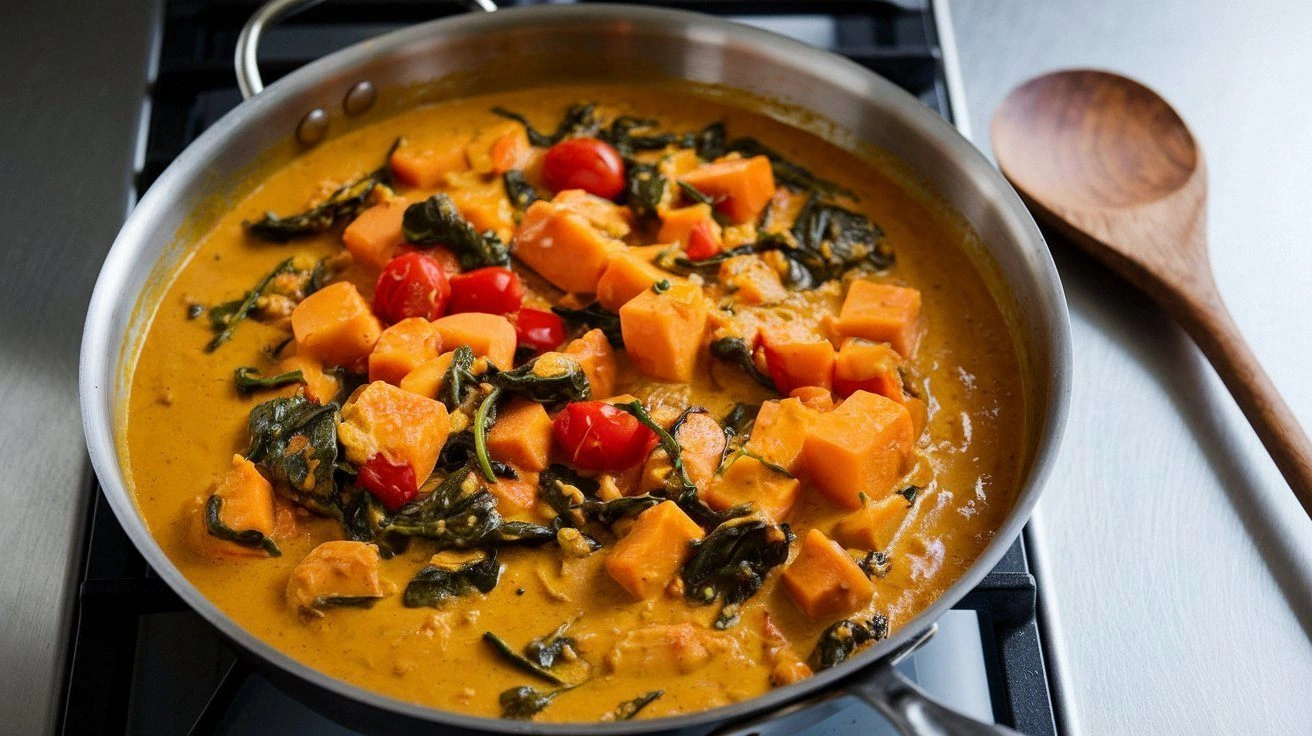
The Method — Step by Step
- Heat the olive oil in a medium saucepan over medium heat. Add the cumin, coriander, turmeric, garam masala, and chili powder, stirring constantly for 30 seconds until fragrant. This step releases the spices’ essential oils, preventing a raw, bitter taste. The aroma should be warm and inviting, signaling that the base is ready.
- Introduce the diced onion to the pan, sautéing until it turns translucent and lightly golden. Stir frequently to avoid burning, as the onions will caramelize and develop sweetness. The onions should soften but still retain a slight bite, creating a foundation for the sauce. This process also helps to lift the spices into the oil.
- Add the minced garlic and ginger, cooking for an additional minute until the aroma becomes more pronounced. Keep the heat moderate to prevent the garlic from turning bitter. The garlic and ginger infuse the oil with their bright, zesty qualities. This layer of flavor will carry through the entire dish.
- Stir in the diced butternut squash, ensuring each cube is coated with the spice mixture. Cook for about 5 minutes, allowing the squash to start softening while retaining some firmness. The squash should begin to brown slightly on the edges, indicating caramelization. This step brings a subtle sweetness that balances the spices.
- Pour in the coconut milk and vegetable broth, then add the tomato paste. Stir until the tomato paste is fully incorporated, creating a smooth, velvety sauce. Bring the mixture to a gentle simmer, allowing the flavors to meld. The sauce should thicken slightly, enveloping the squash.
- Reduce the heat to low and let the curry simmer for 15 minutes, or until the squash is tender but still holds its shape. Stir occasionally to prevent sticking and ensure even cooking. The sauce should reduce to a rich, creamy consistency. This slow simmer allows the spices to fully bloom.
- Fold in the frozen peas, allowing them to heat through for the last 2 minutes of cooking. The peas add a pop of color and a subtle sweetness that complements the squash. They should remain bright green and slightly crisp. This final addition ensures a balanced texture profile.
- Finish the curry by sprinkling the toasted cashews, adding a splash of lime juice, and garnishing with fresh cilantro. The cashews provide crunch, while the lime brightens the dish. The cilantro adds a fresh, herbal note that lifts the overall flavor. Serve immediately for the best experience.
Insider Tricks for Flawless Results
The Temperature Rule Nobody Follows
Maintaining a steady low heat during simmering is crucial for a silky sauce. A high flame can cause the coconut milk to scorch and develop a bitter aftertaste. Keep the heat at a gentle simmer, and the sauce will thicken naturally. This simple temperature control transforms a good dish into a great one.
Why Your Nose Knows Best
Trust your sense of smell; it’s a reliable indicator of doneness. When the aroma becomes rich and the spices are fully released, the curry is ready to taste. A faint, raw scent signals that the spices need more time. Use your nose to avoid overcooking or under-seasoning.
The 5-Minute Rest That Changes Everything
After removing the curry from heat, let it rest for five minutes before serving. This allows the flavors to settle and the sauce to thicken slightly. The rest period also lets the cashews settle, ensuring a crisp texture. A brief pause before plating elevates the overall experience.
Keep the Peas Fresh
Adding frozen peas at the last minute preserves their bright color and subtle sweetness. Overcooking peas can turn them mushy and dull the visual appeal. A quick stir for two minutes keeps them crisp and vibrant. This small detail adds a pop of color that makes the dish more enticing.
Use Fresh Lime Juice
Lime juice adds brightness and balances the richness of coconut milk. Freshly squeezed lime is preferable to bottled juice, which can be more acidic. Squeeze just before serving to preserve the citrus aroma. The lime’s acidity cuts through the sauce, creating a harmonious flavor.
Garnish with Fresh Cilantro
Fresh cilantro adds a burst of green and a subtle peppery note that complements the dish. Chop the cilantro just before serving to retain its aroma. The green color also enhances the visual appeal, making the curry look inviting. A sprinkle of cilantro transforms the dish from ordinary to extraordinary.
Creative Twists and Variations
Spicy Thai Variation
Replace garam masala with Thai red curry paste for an authentic Thai flavor profile. Add a handful of Thai basil leaves at the end for an aromatic finish. The heat level can be adjusted by adding more or less paste, giving you control over spiciness. This variation delivers a bold, aromatic experience.
Vegan Protein Boost
Swap peas for chickpeas or lentils for added protein. The legumes provide texture and a nutty flavor that complements the curry. Use a can of chickpeas, drained and rinsed, to keep the dish vegan-friendly. This version is both hearty and satisfying.
Breakfast Kick
Serve the curry over fluffy scrambled eggs or a protein-packed tofu scramble. The eggs add a savory element that balances the sweetness. This breakfast twist turns the dish into a filling, protein-rich start to your day. It’s a great way to enjoy a curry morning.
Cheesy Delight
Stir in a handful of shredded mozzarella or cheddar cheese during the last minute of cooking. The cheese melts into the sauce, creating a creamy, indulgent texture. The cheesy layer adds richness without overpowering the spices. This variation is perfect for cheese lovers.
Low-Carb Option
Omit the peas and replace the butternut squash with cauliflower florets. The cauliflower absorbs the spices while keeping the dish low-carb. Adjust the cooking time slightly, as cauliflower cooks faster. This version is ideal for those watching their carbohydrate intake.
Sweet & Spicy Fusion
Add a tablespoon of honey or maple syrup to the sauce for a subtle sweetness. Pair this with a pinch of cayenne pepper for heat. The combination creates a balanced sweet-spicy profile that’s addictive. This twist adds a new dimension to the classic curry.
Storing and Bringing It Back to Life
Fridge Storage
Store leftovers in an airtight container in the refrigerator for up to 3 days. The flavors will deepen, making it even more delicious the next day. When reheating, add a splash of water to maintain moisture. This ensures the sauce remains silky and the squash stays tender.
Freezer Friendly
Freeze the curry in a freezer-safe container for up to 2 months. Thaw overnight in the refrigerator before reheating. Gently warm on the stove, adding a little water if needed. This method preserves the texture and flavor for future meals.
Best Reheating Method
Reheat the curry on low heat, stirring frequently to prevent sticking. Add a splash of coconut milk or water to restore creaminess. The dish should reach a gentle simmer, not a rolling boil. This gentle reheating keeps the sauce smooth and the squash intact.
Serving Suggestions
Pair the curry with fluffy basmati rice or warm naan for a complete meal. A side of cucumber raita balances the heat with cool, creamy yogurt. Garnish with extra cilantro and lime wedges for a fresh finish. The combination of textures and flavors creates a satisfying, balanced dish.
Behind the Scenes
When I first tried this recipe, I had no idea how transformative the toasted cashews would be. The crunch added a layer of texture that I hadn’t anticipated. I also discovered that adding a splash of lime juice at the end was essential for brightening the dish. Without it, the curry would feel heavy and flat. The final dish became a symphony of sweet, savory, and bright notes.
My first attempt at this curry involved cooking the squash for too long, resulting in mushy cubes. I learned that a short caramelization step before adding liquids was key. The caramelized squash gives a natural sweetness that balances the spices. It also adds a subtle depth that a raw squash simply cannot provide. This tweak turned the dish into a culinary triumph.
When I shared the dish with friends, the reactions were overwhelmingly positive. One friend remarked that the curry tasted like a warm hug on a cold day. Another said the cashews added the perfect crunch. Their feedback confirmed that the dish was both comforting and exciting. Their enthusiasm inspired me to refine the recipe further.
Throughout the cooking process, I kept a mental checklist of sensory cues. The aroma of toasted spices, the color change of onions, and the texture of the squash were all indicators of progress. This mindful approach helped me avoid common pitfalls. By paying attention to these cues, I ensured the dish turned out perfectly every time.
My kitchen became a laboratory where I experimented with different spice blends. I swapped garam masala for curry powder, and the flavor profile shifted subtly. I also tried adding a pinch of cumin seeds to the oil for a nutty aroma. These experiments taught me that small changes can have a big impact.
Ultimately, this recipe has become a staple in my weekly meal rotation. It’s versatile, comforting, and always a crowd-pleaser. Whether you’re cooking for yourself or a group, this curry delivers. I’ll keep tweaking it, but the core remains unchanged: a delicious, comforting dish that brings people together.
Chef's Final Thoughts
Cooking is an adventure that rewards curiosity and patience. This butternut squash curry is proof that a simple dish can become extraordinary with the right techniques. I hope you enjoy every step as much as I did. Feel free to tweak the spices to suit your palate; cooking is personal, after all.
Remember that flavor is a conversation between ingredients, and each one has a voice. The spices speak boldly, the squash whispers sweetness, and the coconut milk offers a creamy backdrop. When balanced, they create a harmonious dish that satisfies both the body and the soul.
As you plate the final dish, take a moment to appreciate the colors, textures, and aromas. The bright orange of the squash, the green of cilantro, and the golden hue of the sauce all contribute to a feast for the senses. The result is a dish that feels both familiar and exciting.
Enjoy this curry with a side of rice, naan, or even a simple green salad. Pair it with a chilled glass of rosé or a light lager for a complete dining experience. Share it with friends, family, or anyone who loves comforting, flavorful food.
Bon Appétit
Now that you’ve mastered this butternut squash curry, it’s time to experiment. Try adding different proteins, adjusting the heat level, or even incorporating seasonal vegetables. The possibilities are endless, and each variation will bring a new flavor adventure. Keep cooking, stay curious, and enjoy every bite.